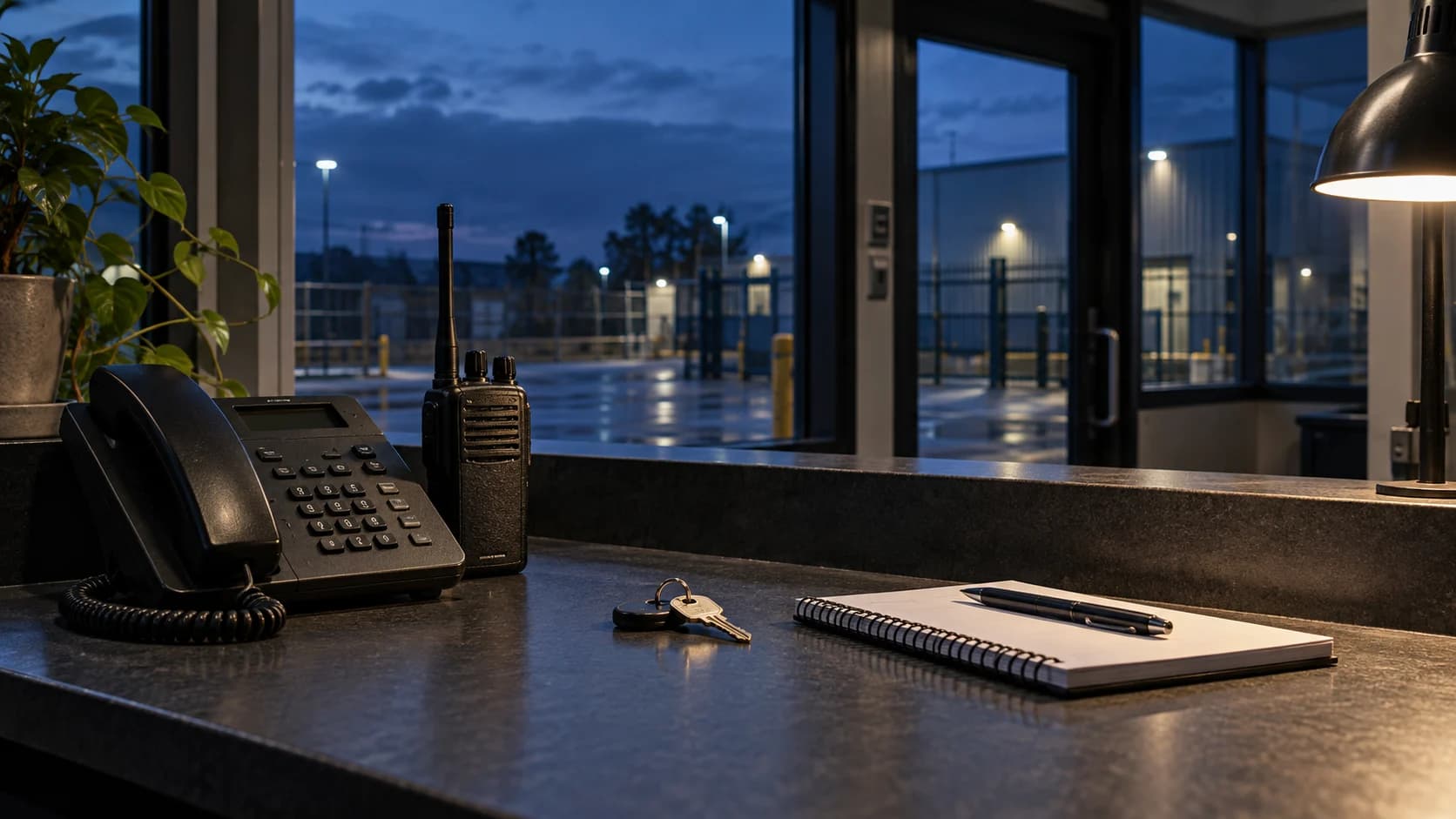
The useful distinction is the trigger. If a service starts only after a building alarm, ask whether it ever receives a person crossing the external yard.
The idea in view · Planning diagram
Start by identifying the work trigger
- Alarm-linked request
- Available image
- Verification decision
- Scheduled remote duty
- Approved remote action
- Local response handoff
Make the call
Follow one event from input to action
| Situation | Decision to make | What to ask for |
|---|---|---|
| A door sensor starts the event | Whether video is used only to verify that alarm | Supported panel inputs and linked views |
| A camera sees activity outside the building | Whether the service receives that event independently | A camera-event demonstration |
| Both inputs describe the same occurrence | How duplicates are handled | One incident record with both source references |
Trace the trigger
Ask the provider to draw the path from a sensor or camera event to a reviewer. A service that only checks an intrusion alarm may not review a person in an outdoor yard. Conversely, camera alert review does not automatically monitor every separate alarm panel signal.
Trace the action
Specify whether the reviewer can issue an approved speaker message, call a keyholder or contact a response partner. Hardware support, local permissions and the written scope determine those actions. Request a sample incident record showing the distinction between attempted contact and confirmed attendance.
Test the boundary case
Choose one scenario that triggers the alarm panel and another that appears only on camera. Ask what happens to each. If both are needed, identify who owns the integration and what happens when one input is unavailable.
Use a scenario that separates the offers
Choose two safe examples for the provider discussion: a staged door alarm and an authorized person at an external boundary. Ask the bidder to describe what its service receives in each case. The exercise can expose a missing integration without requiring the buyer to understand every alarm protocol.
Next, examine the permitted action. Verification may establish that activity appears genuine while leaving the contact or response decision to another party. Remote guarding may include a speaker or contact workflow, but those functions depend on equipment and scope. SCW’s own page distinguishes its offers this way; other providers may use the labels differently. Record the trigger and action rather than buying the name.
Begin with the alarm or operating trigger
Video verification asks a reviewer to use images to assess a particular alarm or reported event. Remote guarding can describe a broader set of remotely performed security duties, but providers use the term differently. Instead of buying the label, identify what starts the work, what the reviewer receives and what they are expected to decide. That makes the comparison usable across providers without pretending the market uses one universal definition.
For an alarm-linked task, check which alarm and camera view are associated, how much context is available and what happens if the view is unavailable. For a scheduled remote duty, define the period, location and activity to be reviewed. The service may use both approaches. What matters is whether the written plan describes each duty and whether the system can supply the evidence needed to perform it under the site's actual conditions.
Review does not create authority to intervene
A reviewer may be able to observe activity, request context, issue an approved speaker message or contact a named person. Those actions require agreed authority and suitable equipment. They do not establish the right to admit someone, unlock a door, confront a person or make a decision reserved for the site. Write the limits into the response instruction instead of leaving a reviewer to infer them during an ambiguous event.
Physical attendance is a separate arrangement. Identify the party that can accept a request, its coverage conditions and who owns the incident while waiting. If no local response is available, the operating plan must reflect that. A remote service can provide useful review and records without supplying every part of a site security operation. The buyer should understand the remaining duties and decide how the business will cover them.

Ask each provider to demonstrate the same handoff
Use one realistic incident description and ask the provider to walk through it. What initiates review? Which camera is used? What is recorded as observation versus interpretation? When is the site contacted, and what confirms that someone accepted the next action? Ask to see the form of a redacted or fictional report rather than requesting another customer's private footage.
Then introduce a complication: no usable image, an unanswered call or an apparently familiar vehicle using an unapproved route. The answer should identify the authorized fallback and the remaining uncertainty. It should not turn an unclear image into certainty or a contact attempt into a resolved incident. Compare the resulting responsibilities and records before comparing the service names, recurring fees or marketing descriptions.
A fictional workshop: an alarm near a service door
A warehouse alarm activates near a rear service door. The associated camera shows a person but does not establish whether the person is an authorized contractor. A verification duty might assess the available image and relay the observed facts under the alarm response plan. A broader remote duty might also involve a scheduled check or an approved speaker message, if those functions have been accepted into scope.
Neither path should label the person an intruder solely because a booking note is missing. The reviewer can describe the observation, request the permitted confirmation and record the next authorized action. If the site cannot confirm the activity, the uncertainty remains in the record. Use the scenario to decide what information the business must supply and what the service can do when that information is absent. The choice may involve combining services rather than replacing a local duty with a remote label.
Before you move on
- List the alarm and video inputs separately.
- Obtain a written trigger-to-action diagram.
- Exercise each required input without initiating emergency dispatch.
A worksheet you can actually use
Start with the blank sheet. Add one row per item, assign an owner and mark anything unresolved as pending. The completed example shows the level of detail to aim for.
Keep completed security plans private. Use aliases; keep passwords, access codes, personal contacts and footage links in your approved systems.
How to fill the worksheet
- Scenario
- Use a concrete operating situation that every proposal can address, including an ambiguity or failure case where useful.
- Input
- Identify what initiates work and which image, alarm or other context reaches the reviewer through the supported path.
- Review included
- Describe the actual decision duty, not simply whether a human is somewhere in the service architecture.
- Permitted action
- State the authorized remote action and distinguish it from physical attendance, access decisions or emergency-service commitments.
- Open question
- Keep the missing fact or unaccepted duty visible, with the person responsible for clarification before reliance.
A worked example
Fictional yard: a person crosses the external gate line without opening a building door. The buyer checks whether the proposed service receives that event rather than assuming the building alarm covers it.
| Scenario | Input | Review included | Permitted action | Open question |
|---|---|---|---|---|
| External gate crossing | Camera event | Confirm with bidder | Site plan | Does alarm-only service receive it |
Questions readers bring to this task
What else should you know?
Is video verification enough for a yard?
It depends on whether the relevant yard activity generates a supported alarm and whether the contracted workflow handles it. If the task requires camera-driven review independent of a panel, ask for that specifically. Avoid assuming one model is universally better; compare the route you need covered.
Link to this answer ↗Is remote guarding the same as a security guard on site?
No. Remote work depends on agreed camera views, communications and permitted actions. An on-site guard has a physical presence during a defined shift and may perform duties a remote reviewer cannot. Compare specific tasks and responsibilities rather than assuming either role can substitute for every function of the other.
Link to this answer ↗Does video verification confirm that a crime occurred?
Images may support or limit an assessment of an alarm, but an ambiguous scene does not establish intent or a legal conclusion. A useful report distinguishes what was visible, what was inferred and what could not be determined. The response should follow the agreed procedure and local requirements.
Link to this answer ↗Can one monitoring agreement include both?
Yes, if the provider accepts the relevant duties and the equipment and operating plan support them. Describe each trigger, viewing period, permitted action and reporting requirement separately. A combined service still needs clear boundaries for outages, missing context and physical response.
Link to this answer ↗Notes & sources
Terminology is not standardized across commercial offers. Local authority response must be confirmed separately.
Reviewed October 27, 2026. The examples and worksheets are planning aids, not customer results or a statement of contracted service.
- SCW: professional camera monitoring
Provider description of alert review and scoped response. Its offer is not a NightMarshal commitment.