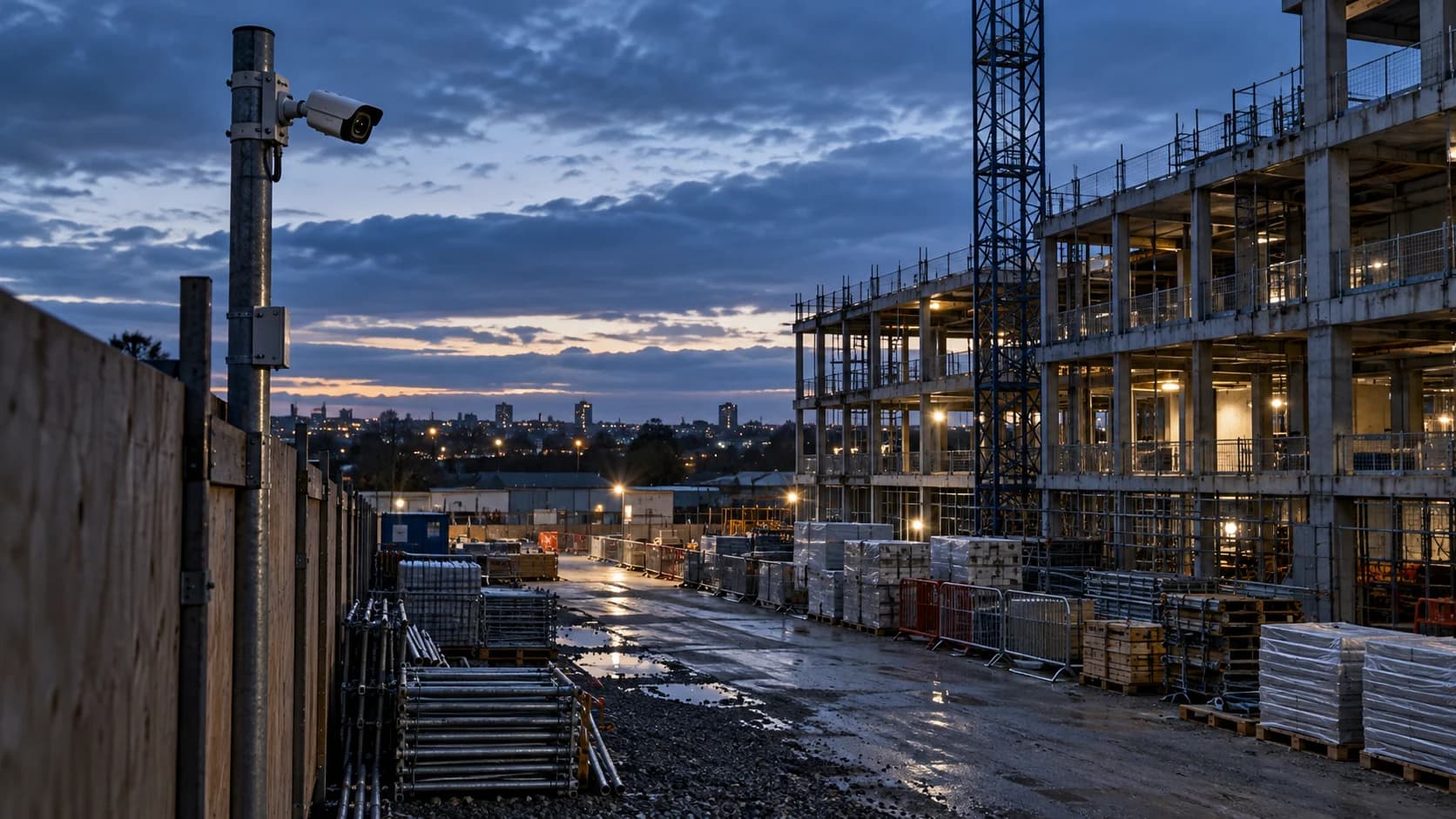
Construction changes the scene faster than the camera register. Tie coverage review to the work phase so the old entrance does not remain the best-monitored part of a new layout.
The idea in view · Planning diagram
A phase change can alter every sightline
- New hoarding
- Moved materials
- Changed route
- Temporary lighting
- Moved camera
- Reaccepted duty
Link coverage to the phase plan
Ask the site team to identify new entrances, vulnerable assets and blocked approaches. Keep authorized working hours and subcontractor activity current. A camera still pointed at yesterday’s gate can remain technically online while covering the wrong task.
Control temporary arrangements
Record temporary power, connectivity and camera ownership. Have qualified staff assess safe mounting and maintenance access. Expire temporary rules and notify the monitoring team before a planned move, with a fallback for the gap.
Reaccept changed views
Run an authorized route check after the move and after dark where relevant. Update aliases and the view map without losing the change history. Record which areas remain unsupported during the next phase.
Use the phase meeting to find the camera changes
Ask the site team which entrances, storage locations and authorized hours are changing. Bring that information into the view register and operator brief before moving equipment. Installation work needs qualified staff and safe access; a security deadline should not lead to an improvised mounting or power arrangement.
Keep a record of the interval between old and new accepted coverage. Test the changed route with ordinary lighting and representative obstructions, then confirm event delivery if it is part of the duty. If a temporary unit or connection is used, assign its ownership, maintenance and removal. The next phase should inherit a current plan rather than another unexpired note.
Treat construction as a changing scene
Construction can alter routes, lighting, hoarding, storage and camera sightlines while equipment remains online. A view accepted earlier in the project may no longer show the area it was intended to support. The site needs a way for the construction or facilities team to flag changes before people rely on outdated coverage assumptions.
Map the current duty to the actual scene. Identify which routes are active, which areas are restricted and where temporary activity is expected. Do not assume yesterday's delivery or access instruction applies after a phase change. A simple dated plan linked to camera aliases can help the monitoring team understand what changed without distributing unnecessary technical access information.
Review temporary changes before they become permanent
A moved hoarding panel or temporary stack may be expected for only a few days, but the operating consequence still needs an owner and expiry. Record the affected views, relevant instruction and temporary arrangement. If a camera must move, use the authorized installer and site safety process rather than informal work at height or unsupported mounting.
Changing a view may also change privacy boundaries, event regions and useful detail. The camera appearing in the interface after relocation does not establish that the original duty survives. The responsible team should assess the new scene and decide what needs a relevant test. Temporary work should not silently broaden the monitored area or leave an old restricted-route rule attached to the wrong image.
Reaccept the task at meaningful project changes
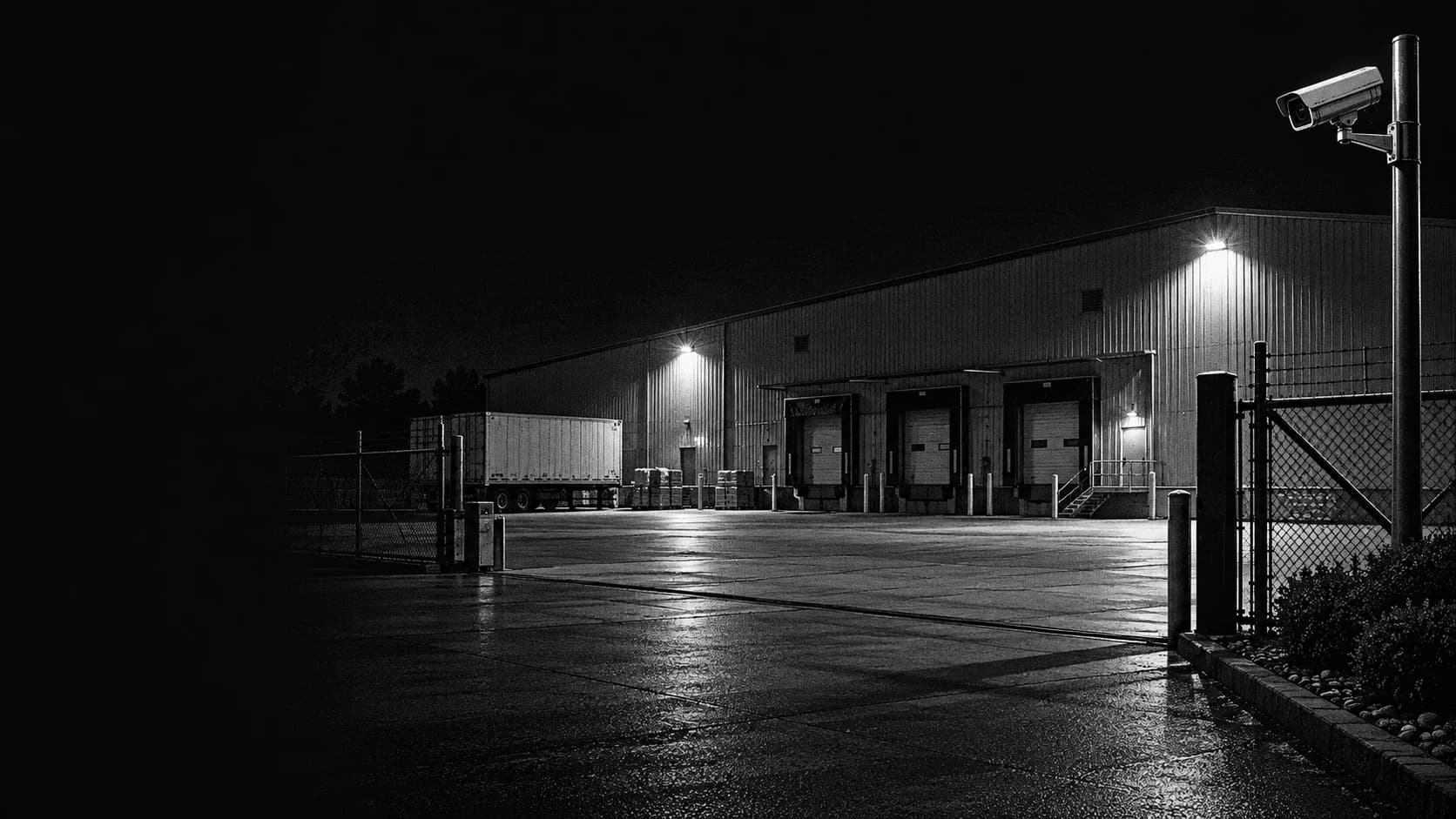
Use authorized safe scenarios to check the actual route, lighting and event path after a material change. Construction traffic and incomplete surfaces create safety considerations, so tests must follow the site's rules. Do not stage movement in an active plant route merely because it is visible to the camera.
Keep the result specific to the phase and conditions. A night test in an open shell does not automatically cover the scene after walls, cabins or stored material arrive. The camera register and rulebook should reflect the current accepted state, with pending issues visible. Coordinate these updates with the people who change the site, because the monitoring provider may see an obstruction without knowing why it appeared or when it will move.
Reference context: Axis: Object Analytics manual
A fictional phase change behind new hoarding
A construction site adds hoarding to separate a new work area. The existing camera still records and produces events, but a pedestrian approach now disappears behind the barrier. The old map shows coverage because it predates the change. The site records the affected route and does not assume a green camera status means the duty remains intact.
The project team assesses a supported alternative view or temporary site arrangement, then tests the relevant route safely. The accepted instruction identifies the new phase, expected activity and response owner. If the gap cannot yet be resolved, it stays outside accepted coverage with a decision owner. This gives the site a practical current plan rather than a security drawing frozen at the start of construction.
Make the call
Which phase change needs a camera review?
| Situation | Decision to make | What to ask for |
|---|---|---|
| The vehicle gate moves | Whether the new approach is supported | A revised route map and acceptance test |
| Scaffolding or stock blocks a view | Whether the obstruction is temporary or recurrent | An approved coverage remedy |
| Temporary power is removed | Which capture or delivery duty stops | A dependency and transition plan |
Before you move on
- Review the new work phase and access routes.
- Plan authorized moves and temporary coverage gaps.
- Retest views and brief the monitoring team.
A worksheet you can actually use
Start with the blank sheet. Add one row per item, assign an owner and mark anything unresolved as pending. The completed example shows the level of detail to aim for.
Keep completed security plans private. Use aliases; keep passwords, access codes, personal contacts and footage links in your approved systems.
How to fill the worksheet
- Work phase
- Identify the current project stage and effective period so earlier acceptance evidence is not silently applied to a new scene.
- Changed route
- Describe the actual access or movement change, including hoarding and normal material positions that affect the monitoring task.
- Affected view
- List the view aliases and duties that may change, including event regions, lighting and privacy boundaries where relevant.
- Planned gap
- State the temporary limitation and accepted arrangement rather than presenting connected cameras as unchanged coverage.
- Retest owner
- Assign the authorized team for the relevant safe scenario and technical checks after the change.
- Accepted status
- Record the actual reliance decision for the current phase, with pending conditions and next review triggers kept visible.
A worked example
Fictional project: the vehicle entrance moves to the south boundary. The team updates the rulebook and tests the new approach before treating the old camera arrangement as replaced.
| Work phase | Changed route | Affected view | Planned gap | Retest owner | Accepted status |
|---|---|---|---|---|---|
| Phase B | South vehicle gate | TEMP-03 | To agree | Site security lead | Pending |
Questions readers bring to this task
What else should you know?
Can the same rules be copied to the next phase?
Use them only where the assumptions still hold. The new gate, working hours, lighting and visible subject path may differ. Check each required task and obtain acceptance of the changed view rather than treating the copied configuration as a test result.
Link to this answer ↗Does every construction phase need new cameras?
Not necessarily. A phase change may need an instruction, layout, lighting or configuration review, or a different accepted scope. Assess the task and current views before deciding on equipment. Retest material changes instead of assuming either replacement or continued suitability.
Link to this answer ↗Who should report a new obstruction?
Give the site team a clear reporting route and owner. People moving materials or hoarding may notice the change before a remote reviewer understands its context. The monitoring and technical teams should then assess the affected duty and record any temporary limitation.
Link to this answer ↗Can a temporary camera move use the old acceptance record?
The old record describes the previous configuration and conditions. A move can change detail, event regions, obstructions and boundaries. Identify and perform the relevant new checks with authorized personnel before treating the moved view as accepted for the same duty.
Link to this answer ↗Notes & sources
Camera monitoring does not replace site safety controls, physical barriers or a site-specific security assessment.
Reviewed October 27, 2026. The examples and worksheets are planning aids, not customer results or a statement of contracted service.
- ProtectUK: CCTV operational checklist (2022)
Operational prompts on purpose, coverage, lighting and review. Its historical legal references are not used as current law.
- Surveillance Camera Commissioner: Buyers Toolkit (2018)
Historical operational requirements, commissioning and handover context; not current legal advice or certification.
- Axis: Object Analytics manual
Manufacturer guidance on scenes, filters and detection limitations. Not evidence of NightMarshal detection performance.