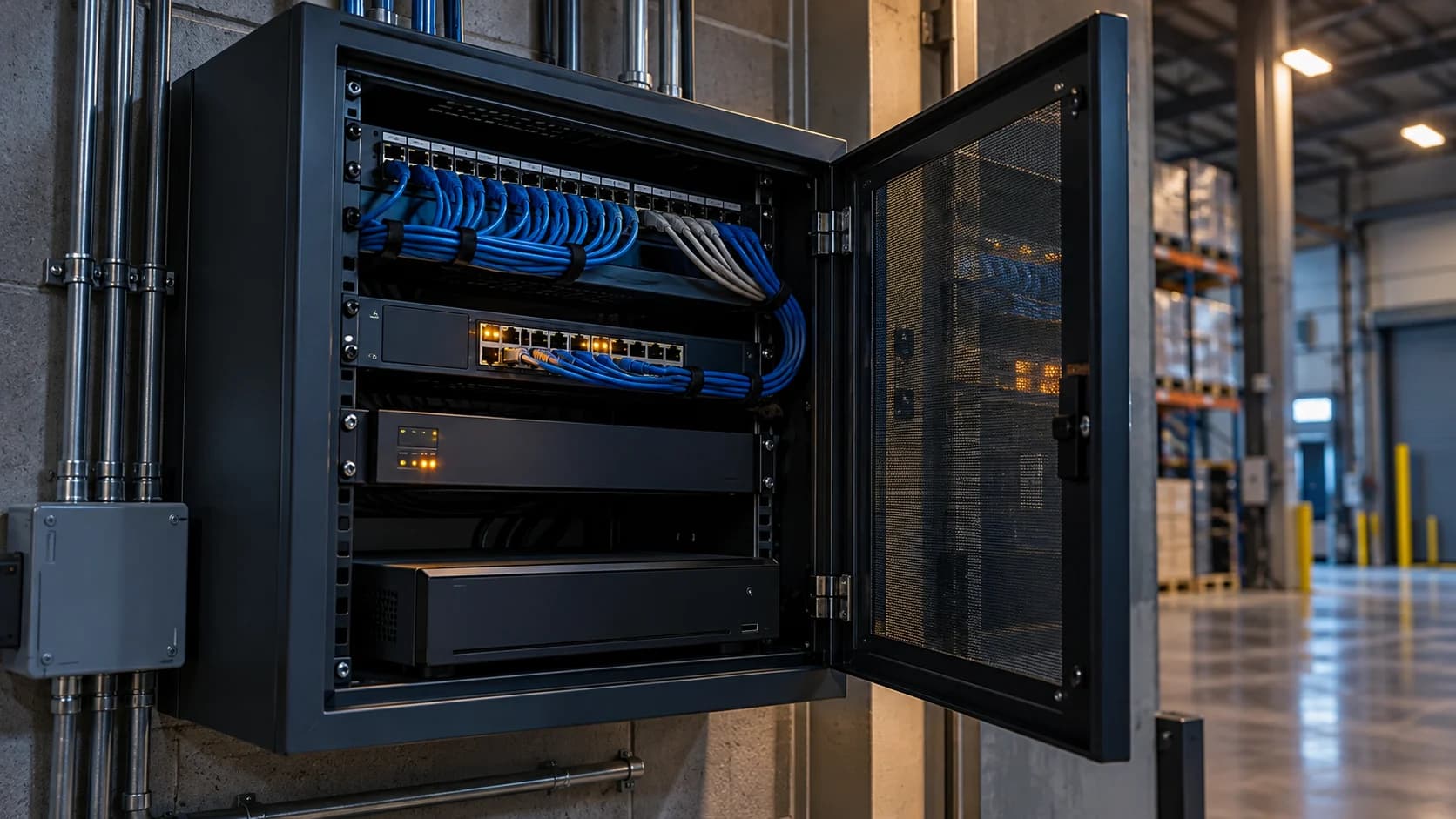
An internet outage does not have one universal effect on a camera system. Find out which duties continue locally and which remote decisions have stopped.
The idea in view · Planning diagram
Local recording and remote review can diverge
- Camera power
- Local network
- Recorder history
- Site uplink
- Remote review path
- Accepted response
Classify the outage
Distinguish a single missing view, recorder failure, site network loss and monitoring connection failure. Record the first known impact and current uncertainty. Notify the site owner using a channel that does not depend on the failed path.
Apply an agreed fallback
The site owner decides temporary measures with the relevant safety and response teams. Do not assume a remote outage automatically creates physical patrol cover. Record any unsupported period honestly, including what evidence may still be recorded locally.
Restore and reconcile
Test fresh video and relevant events, then confirm the receiving team has resumed responsibility. Review the outage interval for locally recorded incidents where authorized. Close the fault with a cause, corrective action and remaining limitation.
Keep the outage record and incident record connected
Use a fault reference to identify affected views, first known impact and restoration. If the interval is uncertain, say so. Tell the coverage owner through a channel that does not rely on the failed connection. An approved local fallback belongs in the site plan; it should not be invented by the remote reviewer after the loss.
After restoration, distinguish resumed live review from any later review of locally recorded footage. The second task may be useful, but it cannot retroactively provide the real-time response that was unavailable. Record who accepted restoration and what was checked. Use the outage review to correct a specific dependency, notification or ownership issue.
Identify which duty the outage removes
Power, local networking, internet access, recording and the remote service can fail in different combinations. The playbook should describe the observable state and the affected duty rather than label every incident a total system failure. A lost remote path may leave local recordings intact, while a switch power failure may remove both camera video and events.
Record what is confirmed and what remains unknown. The business needs to know whether it can rely on review, recording or neither during the gap. Do not infer continued coverage from an old image or a connected interface. Communicate the limitation to the agreed site owner promptly, with the temporary arrangement and next update responsibility defined by the service plan.
Prepare fallback actions before the interruption
A fallback is an authorized operating decision, not an improvised technical shortcut. The site may need a temporary local procedure, a different accepted view or a pause in reliance on the affected duty. The appropriate choice depends on the business, safety arrangements and available people. Do not invent a physical response or ask someone to attend an unsafe location simply because remote video is unavailable.
The technical team should have the supported investigation and restoration references. Keep passwords, public camera links and emergency access workarounds out of the general playbook. If the failure affects several services, coordinate changes with their owners. Restoring one function by disabling protections or disconnecting another critical system can create a new problem that the camera status screen will not reveal.

Restore the service in stages
Check the relevant power and network dependencies, then verify useful video, recording and event delivery as appropriate. If the system restarted or recovered from backup, confirm time, framing, permissions and current instructions. A recovered stream may have an old preset or incomplete rules. The restoration check should match the duty the business actually relies on.
Record last confirmed working, first observed failure, technical restoration and resumed accepted service where known. Keep uncertain times qualified. Review the cause and corrective action after the immediate gap is managed. A recurring outage may need a design or maintenance decision, while an isolated fault may need a targeted repair. The incident log should support that distinction rather than simply count outages without context.
A fictional internet interruption with local recording
A warehouse loses its internet connection overnight. The remote reviewer cannot obtain the accepted views, while an authorized local check confirms recording continues. The playbook records the remote review gap and activates the site's agreed temporary arrangement. It does not claim that local recording provides the same service as live exception review.
After connectivity returns, the team tests a relevant event and confirms usable review and the current response path. Local footage may be retained or retrieved for an authorized purpose, but the report keeps the monitoring interruption visible. The closure note distinguishes connection recovery from verified service resumption. That record helps the business decide whether the dependency needs further resilience work without inventing precise downtime or an incident outcome.
Make the call
What remains available during the outage?
| Situation | Decision to make | What to ask for |
|---|---|---|
| Local recording continues | Whether anyone can review remotely | An explicit remote-coverage gap |
| The recorder or camera power fails | Whether any useful footage is captured | Qualified technical assessment and the approved fallback |
| The connection returns | Whether the event path also recovers | Fresh video and a supported restoration test |
Before you move on
- Name the outage scope and responsible role.
- Notify the gap and activate only approved fallback measures.
- Verify restoration and reconcile the unsupported period.
A worksheet you can actually use
Start with the blank sheet. Add one row per item, assign an owner and mark anything unresolved as pending. The completed example shows the level of detail to aim for.
Keep completed security plans private. Use aliases; keep passwords, access codes, personal contacts and footage links in your approved systems.
How to fill the worksheet
- Outage type
- Distinguish power, local network, internet, device and remote-service symptoms instead of assuming every outage has the same effect.
- Affected duty
- State which accepted function is unavailable and what remains confirmed, such as local recording or a separate useful view.
- Notification owner
- Assign the role that communicates the operating gap and keeps the accepted site owner informed while investigation continues.
- Approved fallback reference
- Link the actual authorized temporary procedure, not an improvised access bypass or an unaccepted physical response duty.
- Restoration test
- Check useful video, recording, events and current instructions as relevant before recording that the accepted service has resumed.
A worked example
Fictional outage: the site internet fails while the NVR keeps recording. The duty manager applies its temporary site procedure and later requests an authorized review of the gap interval.
| Outage type | Affected duty | Notification owner | Approved fallback reference | Restoration test |
|---|---|---|---|---|
| Site network loss | Remote review | Duty manager | Site plan section to agree | Fresh stream and test event |
Questions readers bring to this task
What else should you know?
Do we need an on-site guard during every outage?
That is a site risk and operating decision, not an automatic substitute. Agree available fallback options, their safety requirements and who may activate them. Do not imply equivalent physical cover when no attendance arrangement exists.
Link to this answer ↗Does an internet outage always stop recording?
No. Local recording may continue if its power and internal paths remain available, but that must be checked for the actual system. The remote review duty can still be unavailable. Record the observed state rather than treating recording and monitoring as interchangeable.
Link to this answer ↗Should a fallback be another remote-access application?
Only if it is a supported, approved arrangement that has been assessed and accepted for the duty. An improvised application or exposed camera port is not a responsible default. The playbook should identify authorized alternatives before an outage rather than weakening controls under pressure.
Link to this answer ↗What proves the outage is over?
The relevant service checks, not merely a restored router light. Confirm useful video, recording, events and operating instructions as applicable, then tell the responsible team the accepted duty has resumed. Keep any remaining limitation open with an owner.
Link to this answer ↗Notes & sources
No fallback in this template guarantees equivalent protection. Emergency and physical response arrangements must be approved separately.
Reviewed October 27, 2026. The examples and worksheets are planning aids, not customer results or a statement of contracted service.
- MonitorCrew: service scope and pricing factors
Provider description of staffing, hours, handovers and scope. No comparative testing is claimed.
- Axis: Camera Station hardening guide
Vendor-specific network exposure and segmentation guidance.
- Private Security Authority: monitoring centre training requirements (2018)
Historical operational handover context; local licensing requirements need separate review.